Complete Guide to Braces: Types, Treatment Process, Timeline and Results
By Dr Farhan Zaib | Patient guide with clinical context
Thinking about braces often brings up a familiar mix of questions: Which type is best? Will it hurt? How long will it take? And will the result last? These are the common expected questions. Orthodontic treatment is a commitment of time, money, and daily effort, so you deserve more than a promise of a perfect smile in a before and after photograph.
The quick answer
Braces and clear aligners move teeth gradually by applying controlled forces that trigger changes in the periodontal ligament and the bone around tooth roots. Treatment may improve alignment, the way the teeth meet, and the ability to clean certain areas. Many comprehensive treatments take roughly 18 to 24 months, but some cases may be shorter and others could take longer. The appropriate appliance and timeline depend on detailed clinical assessment, not just the age alone, a social-media trend, or a tray advertisement.
What do braces actually do?
A tooth is not fused directly to the jawbone. It is suspended in a thin layer of tissue called the periodontal ligament. When a carefully planned force acts on a tooth, the ligament and surrounding bone respond: bone is remodeled so the tooth can move through the supporting tissues. The process is gradual because living tissues need time to adapt.
That is why orthodontics is not a matter of tightening something until the teeth surrender. Excessive or poorly controlled forces do not guarantee faster progress and can increase the risk of unwanted effects, including root resorption. In simple words, teeth respond to human physiology, not deadlines.
Orthodontic treatment can address crowding, spacing, prominent front teeth, overbite, underbite, crossbite, open bite, and some problems related to jaw growth. The goal is not necessarily to make every smile look identical. It is to plan a result that suits the person’s dental and facial relationships while protecting oral health.
Who may benefit from orthodontic treatment?
An assessment may be useful when teeth overlap, gaps persist, the bite feels uneven, front teeth protrude, teeth wear abnormally, or cleaning remains difficult despite good technique. Some bite problems are obvious; others become clearer only after examining how the upper and lower teeth fit together.
Children can benefit from an orthodontic assessment while their teeth and jaws are developing. The American Association of Orthodontists recommends an initial check no later than age seven. This does not mean every seven-year-old needs braces. Often, the useful outcome is reassurance and monitoring; selected problems may benefit from earlier intervention while growth is ongoing.
Adults can also have orthodontic treatment. There is no single birthday after which tooth movement becomes impossible. However, gum health, bone support, existing crowns or fillings, missing teeth, previous dental trauma, and other oral-health factors can make planning more complex. Active gum disease or untreated decay should be addressed before treatment begins.
Types of braces and clear aligners
1. Traditional metal braces
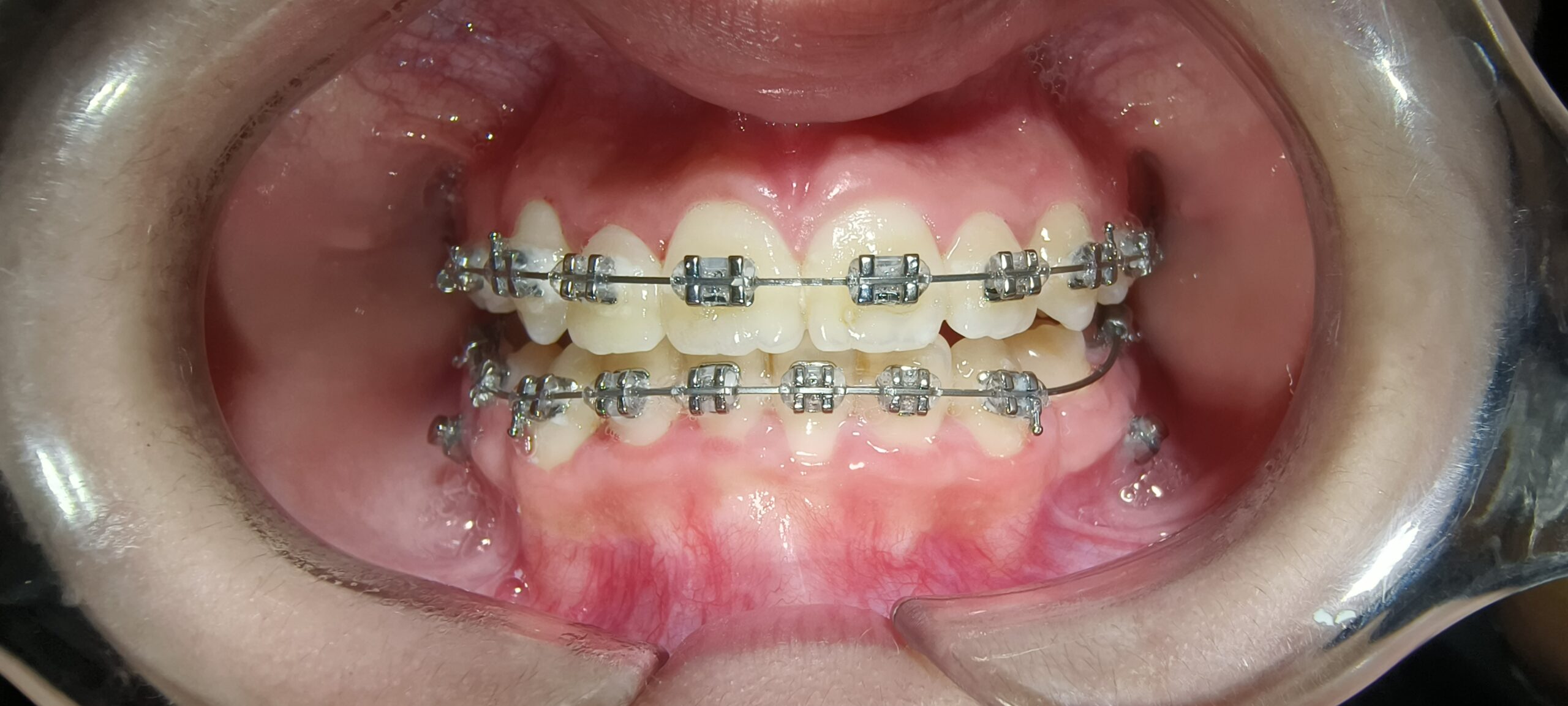
Small metal brackets are bonded to the teeth and connected by an archwire. The wire and other components apply planned forces as the teeth move. Metal braces are visible, but they are versatile and can be used for a wide range of orthodontic problems, including many complex movements.
Their advantages include broad clinical usefulness and the fact that treatment does not depend on remembering to put trays back in after meals. The trade-offs are visibility, extra care when cleaning around brackets and wires, and the possibility of discomfort or breakages if hard or sticky foods damage the appliance.
2. Ceramic or tooth-colored braces
Ceramic braces work on a similar principle to metal braces, but their brackets are designed to blend more closely with tooth color. They may appeal to adults and teenagers who prefer a less noticeable fixed appliance.
They are not invisible. Ceramic brackets can be more brittle than metal, and the appearance of the appliance can be affected by the ligatures or by staining around them when hygiene is poor. Suitability depends on the case and the clinician’s experience with the system.
3. Lingual braces
Lingual braces are attached to the tongue-facing surfaces of the teeth, making them difficult to see from the front. They can be useful for selected patients who strongly prefer a hidden fixed appliance.
Because they sit close to the tongue, they may initially affect speech or feel irritating. They can also be technically demanding, both clinically and for the patient, and may cost significantly more than conventional options. They are not offered by every orthodontic practice, and they are not automatically the best option for every bite.
4. Clear aligners
Clear aligners are a sequence of custom-made transparent trays that move teeth in stages. They need to be removed for eating, drinking anything other than water, and cleaning. For many people, that convenience is a major advantage.
The catch is that removable means responsibility. Aligners generally need to be worn for the daily duration prescribed by the treating clinician. Irregular wear can delay progress or compromise the planned movements. Attachments, elastics, refinements, or a change in treatment approach may be needed. Aligners can manage many cases, including some complex ones, but no system should be described as suitable for everyone.
A practical rule: compare the treatment plan, not just the appliance. Ask what movements are required, how success will be checked, what happens if a tooth does not track as planned, and what the total cost includes.
Which option is best for you?
There is no universal winner. The right choice depends on the diagnosis, the movements required, your oral health, budget, appearance preferences, lifestyle, and ability to follow instructions. A responsible recommendation should explain why an option is suitable for your particular case and what its limitations are.
Be cautious of any assessment that promises a precise finish date or a perfect result without examining your teeth, bite, gums, and relevant records. Digital scans and AI-assisted planning can be helpful tools, but a scan is not a diagnosis and software does not replace clinical responsibility.
The treatment journey: what usually happens?
1. Assessment and records
Your clinician will review your concerns and dental history, examine your teeth and gums, assess your bite, and decide whether photographs, digital scans or impressions, and radiographs are needed. X-rays should be selected for a clinical reason rather than taken automatically without considering the individual case.
2. Diagnosis and treatment plan
The plan should identify the orthodontic problem, explain the realistic goals, and outline alternatives. Depending on the case, treatment may involve space creation, using elastics, applying additional attachments, expansion, or in some scenarios, dental extractions. Extractions are not a routine requirement for everyone with crowded teeth; the decision depends on the full diagnosis and long-term plan.
3. Fitting braces or receiving aligners
With fixed braces, brackets are bonded to the teeth and an archwire is placed. With aligners, you receive trays and instructions for changing them. Your dental team should explain how to clean the appliance, what foods or habits to avoid, how to manage minor irritation, and whom to contact if something breaks.
4. Review appointments
Follow-up visits let the clinician assess progress, check oral health, and make adjustments for further tooth movement. Appointment intervals vary by appliance and treatment stage; many fixed-brace patients are reviewed every 3-5 weeks. Missed visits, repeated breakages, or inconsistent aligner wear can extend treatment.
5. Retention: protecting the result
When active tooth movement ends, treatment is not truly finished until a retention plan is in place. Teeth can shift throughout life, so retainers are commonly needed long term, often at night according to the clinician’s instructions. Retainers may be removable or bonded behind the teeth. Each has benefits and maintenance needs; fixed retainers, for example, require careful cleaning and checks for damage.
If a retainer becomes loose, cracks, is lost, or no longer fits, contact your orthodontic team. Do not force a tight retainer into place. This small retainer that lives in its storage case, is much less expensive than the regret that comes from forgetting it exists.
How long do braces take?
Many comprehensive orthodontic treatments take around 18–24 months, but that is a broad guide, not a promise. Limited tooth movements may take less time; complex bite correction can take longer. The timeline depends on the severity of the problem, the biology of tooth movement, the treatment mechanics, oral health, appointment attendance, appliance breakages, and cooperation with instructions.
Be wary of claims that teeth can always be moved safely in a fraction of the usual time. A shorter plan is not automatically a better plan. Ask your clinician which factors are likely to affect your own estimate and how progress will be reviewed.
Do braces hurt?
Pressure, tenderness when biting, and mild soreness are common after braces are fitted or adjusted and when starting a new aligner. This often improves over a few days. Softer foods, orthodontic wax for sharp edges, and pain relief that is appropriate for you may help; follow the medicine label and your clinician’s advice.
Severe, worsening, or persistent pain is not something to simply tolerate. Contact your orthodontic team if discomfort does not settle, a wire is injuring the mouth, a bracket or attachment is loose, or swelling develops. Facial swelling with fever, difficulty swallowing, or difficulty breathing needs urgent medical or dental assessment.
Oral hygiene: the part you control every day
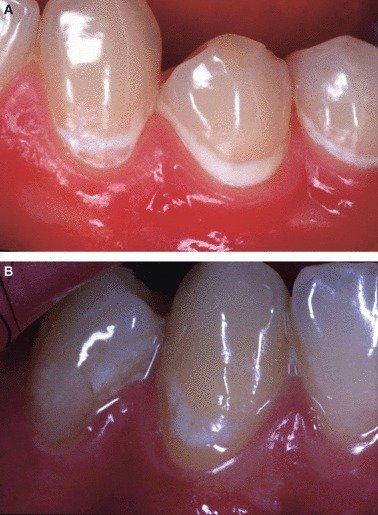
Braces do not directly cause tooth decay, but brackets and wires create extra places for plaque and food to collect. If plaque remains around the brackets, permanent white or brown marks, gum inflammation, and cavities can develop. These spots may remain after the braces come off, an unwelcome souvenir from treatment.
Brush carefully with fluoride toothpaste at least twice daily and after meals when possible, paying attention to the gumline and every side of each bracket. Use an interdental brush or another cleaning aid recommended by your dental team. Clean between teeth daily, limit frequent sugary snacks and drinks, and keep regular general dental check-ups as well as orthodontic appointments.
If you wear clear aligners, remove them for meals and drinks other than water, clean your teeth before putting them back in, and clean the trays according to the manufacturer’s and clinician’s instructions. Do not use hot water on plastic aligners or retainers because heat can distort them.
Risks and limitations to understand before starting
Orthodontic treatment is commonly performed, but it is not risk-free. Risks can include temporary discomfort, enamel demineralisation or decay if hygiene is poor, gum recession or loss of supporting tissue in susceptible patients, root resorption, and relapse after treatment. The likelihood and significance vary between individuals.
A sound plan includes an assessment of dental and periodontal health, discussion of alternatives and limitations, monitoring during treatment, and a realistic retention strategy. Orthodontics can improve tooth position and bite relationships, but it cannot guarantee a dramatic change in adult jaw structure without other treatment, and it should not be promised as a cure for every jaw-joint symptom.
Tell your clinician about previous dental injuries, gum problems, medical conditions or medicines that may affect care, and any concerns about cleaning or keeping appointments. The aim is to make treatment appropriate for you, not simply to get an appliance fitted.
Common myths about braces
Myth: Braces are only for children.
Fact: Adults can benefit too. The condition of the teeth and supporting tissues, the diagnosis, and the treatment goals matter more than a simple age cutoff.
Myth: Clear aligners work for everyone.
Fact: Aligners are useful for many cases, but suitability depends on the movements required and consistent wear. Some patients are better served by fixed braces or a combined approach.
Myth: Faster treatment is always better.
Fact: Tooth movement is biological. Safe, well-planned progress matters more than an ambitious advertising deadline.
Myth: Once braces come off, the teeth stay straight automatically.
Fact: Teeth can shift after treatment. Retainers and follow-up are major part of protecting the result.
Myth: If my teeth look straight, my bite must be correct.
Fact: Alignment is only one part of the assessment. The way teeth meet, the health of the gums, and the stability of the result matter too.
Frequently asked questions
Can I eat normally with braces?
Mostly, with adjustments. Avoid foods that are very hard, sticky, or likely to bend wires or dislodge brackets. Cut firm foods into smaller pieces and follow the specific advice provided by your orthodontic team.
How often should I brush with braces?
Brush at least morning and night with fluoride toothpaste and ideally after meals. Clean around brackets carefully and use inter-dental cleaning aids daily. Your dental team can demonstrate a technique that suits your appliance.
Are braces expensive?
Costs vary by location, case complexity, appliance, clinician, and what the fee includes. Ask for a written breakdown covering records, appointments, repairs, retainers, and any likely additional procedures. The lowest initial price may not represent the lowest total cost.
Can I have braces as an adult?
Most certainly. A clinical examination is needed to assess gum health, bone support, restorations, missing teeth, and the goals that can realistically be achieved.
Do braces affect speech?
Some people notice a temporary change, particularly with lingual braces or aligners. Adaptation varies, and persistent problems should be discussed with the treating clinician.
What if I forget to wear my aligners or retainer?
Follow your clinician’s instructions and contact the practice if you have missed substantial wear time or a retainer no longer fits. Do not double up on wear or force an appliance without advice.
Will braces change my face?
Tooth position and bite can influence the appearance of a smile and lips. The extent of facial change depends on growth, the original problem, tooth movements, and whether jaw surgery or other treatment is indicated. Major skeletal changes should not be promised from braces alone in an adult.
A practical checklist before you commit
Before starting, make sure you and your orthodontist discuss in detail the problem being treated, the expected benefits and limitations, the appliance alternatives, the estimated timeline and total cost, the hygiene routine, the main risks, and the retention plan. Discuss what happens if progress is slower than expected or the first choice of appliance is not achieving the intended movement.
A useful orthodontic consultation should leave you informed, not pressured. If something important is unclear, ask again. Teeth are long-term residents; they deserve a plan rather than a sales pitch.
Final take-home message
Braces and clear aligners can do much more than arrange a photogenic smile. When carefully planned and monitored, orthodontic treatment can improve alignment and bite relationships while supporting a maintainable result. The best option is individual, treatment takes time, oral hygiene is non-negotiable, and retainers matter long after the final appointment.
If you are considering treatment for yourself or your child, arrange an assessment with a suitably qualified orthodontic clinician. An individualized diagnosis is more useful than any online checklist, and much more reliable than asking a selfie filter to evaluate your bite.
Educational disclaimer
This article is for general educational purposes and does not replace an examination, diagnosis, or individualized advice from a qualified dental professional. Treatment options, risks, costs, and timelines vary. Seek urgent care for significant facial swelling, difficulty swallowing or breathing, or other severe symptoms.
References:
NHS: Braces: https://www.nhs.uk/tests-and-treatments/braces/
American Association of Orthodontists: When should a child see an orthodontist?: https://aaoinfo.org/whats-trending/when-should-your-child-see-an-orthodontist/
American Association of Orthodontists: Are retainers necessary after orthodontic treatment?: https://aaoinfo.org/whats-trending/will-i-need-to-wear-retainers/
Leeds Teaching Hospitals NHS Trust: Benefits and risks of orthodontic dentistry: https://www.leedsth.nhs.uk/services/orthodontic-dentistry/benefits-and-risks-of-orthodontic-dentistry/
 Emergency Dental Care